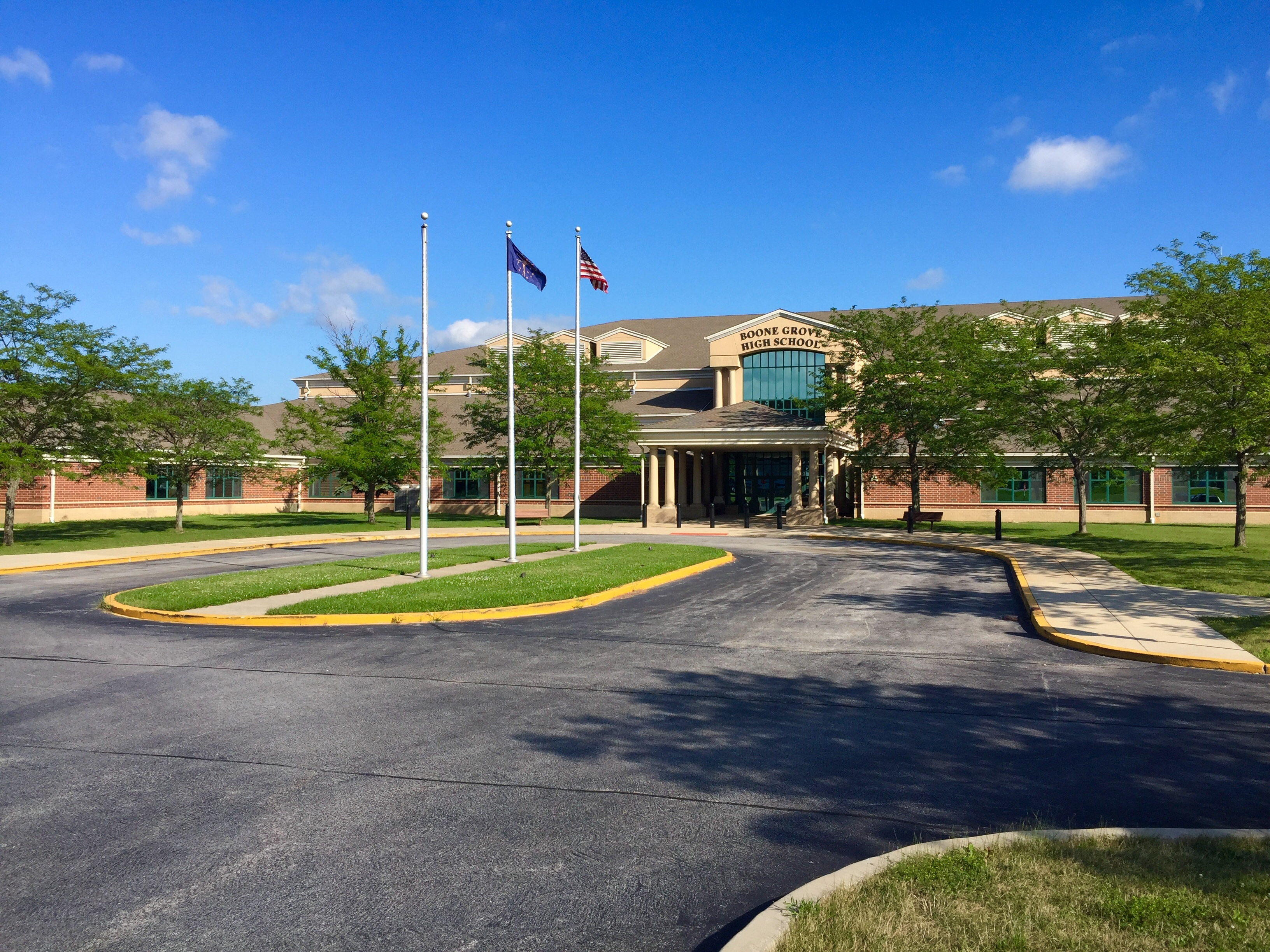
Course Descriptions
English and Literature
ENGLISH 9 – 2 Credits, 2 Semesters
1002 English 9
(ENG 9)
English 9, an integrated English course based on the Indiana Academic Standards for
English/Language Arts in Grades 9-10, is a study of language, literature, composition, and oral
communication, focusing on literature within an appropriate complexity for this grade level. Students
use literary interpretation, analysis, comparisons, and evaluation to read and respond to
representative works of historical or cultural significance in classic and contemporary literature
balanced with nonfiction. Students write responses to literature, expository (informative), narrative,
and argumentative compositions, and sustained research assignments. Students deliver
grade-appropriate oral presentations with attention to audience and purpose and access, analyze,
and evaluate online information.
ENGLISH 9 HONORS – 2 Credits, 2 Semesters
1002 English 9 (H)
(ENG 9 H)
This course is an accelerated course in English 9. English 9 Honors is geared towards students who seek a constant challenge in learning new skills in English/Language Arts. This is a course based on Indiana’s Academic Standards for English/Language Arts in Grade 9. Students will study language, literature, composition, and oral communication with a focus on exploring a wide-variety of genres and their elements. Students use literary interpretation, analysis, comparisons, and evaluation to read and respond to representative works of historical or cultural significance appropriate for Grade 9 in classic and contemporary literature balanced with nonfiction. Students write short stories, responses to literature, expository and persuasive compositions, research reports, business letters, and technical documents. Students deliver grade-appropriate oral presentations and access, analyze, and evaluate online information. This course is for two and four year college bound students who have achieved above grade level in English/Language Arts.
Prerequisite: Must have a recommendation from the 8th grade English Department.
ENGLISH 10 – 1 Credit, 1 Semester
1004 English 10
(ENG 10)
English 10, an integrated English course based on the Indiana Academic Standards for
English/Language Arts in Grades 9-10, is a study of language, literature, composition, and oral
communication, focusing on literature with an appropriate complexity for this grade level. Students
use literary interpretation, analysis, comparisons, and evaluation to read and respond to
representative works of historical or cultural significance in classic and contemporary literature
balanced with nonfiction. Students write responses to literature, expository (informative) and
argumentative compositions, and sustained research assignments. Students deliver
grade-appropriate oral presentations with attention to audience and purpose and access, analyze,
and evaluate online information.
Prerequisite: English 9
ENGLISH 10 HONORS – 1 Credit, 1 Semester
1004 English 10 (H)
(ENG 10H)
This is an accelerated course in English 10. It is geared towards students who seek a constant challenge in learning new skills in English/Language Arts. English 10, an integrated English course based on Indiana’s Academic Standards for English/Language Arts in English 10, is a study of language, literature, composition, and oral communication with a focus on exploring universal themes across a wide variety of genres. Students use literary interpretation analysis, comparisons, and evaluations to read and respond to representative works of historical or cultural significance appropriate for Grade 10 in classic and contemporary literature balanced with nonfiction. Students write short stories, responses to literature, expository and persuasive and compositions, research reports, business letters, and technical documents. Students deliver grade-appropriate oral presentations and access, analyze, and evaluate online information. This course is for two and four year college bound students who have achieved above grade level in English/Language Arts.
Prerequisite: English 9 or English 9H and recommended by English 9 teacher.
ENGLISH 11 – 2 Credits, 2 Semesters
1006 English 11
(ENG 11)
English 11, an integrated English course based on the Indiana Academic Standards for
English/Language Arts in Grades 11-12, is a study of language, literature, composition, and oral
communication focusing on literature with an appropriate complexity for this grade level. Students
use literary interpretation, analysis, comparisons, and evaluation to read and respond to
representative works of historical or cultural significance appropriate in classic and contemporary
literature balanced with nonfiction. Students write narratives, responses to literature, academic
essays (e.g. analytical, argumentative, informative), and more sustained research assignments
incorporating visual information in the form of pictures, graphs, charts and tables. Students write
and deliver grade-appropriate multimedia presentations and access, analyze, and evaluate online
information.
Prerequisite: English 10.
ENGLISH 11 HONORS 2 Credits, 2 Semesters
1006 English 11 (H)
(ENG 11H)
This course is an accelerated course in English 11. English 11 Honors is geared towards students who seek a constant challenge in learning new skills in English/Language Arts. Students use literary interpretation, analysis, comparisons, and evaluation to read and respond to representative works of historical or cultural significance in classic and contemporary literature balanced with nonfiction. Students write responses to literature, reflective compositions, historical investigation reports, resumes, and technical documents incorporating visual information in the form of pictures, graphs and tables. Students write and deliver grade appropriate multimedia presentations and access, analyze online information.
DUAL CREDIT: Through special arrangements with Ivy Tech Community College, students have the opportunity to enroll in a DUAL CREDIT option at no cost. First semester Eng 11 H students will receive three (3) college credits from Ivy Tech for the required ENGL 111: English Composition. Second semester students in Eng 11 H will receive three (3) college credits from Ivy Tech for the required ENGL 215: Rhetoric and Argument. These college credits must be accepted at all Indiana state schools and may be accepted at our state institutions and private schools. In order for a student to enroll in the dual credit option he or she must meet the college requirements. This course is for two and four-year college-bound students who have achieved above grade level in English/Language Arts. This class is for juniors in high ability or seniors who have been recommended by a teacher.
Prerequisite: Juniors must have completed the previous year’s honors class in good standing and complete the application process. Students must sign an agreement acknowledging that they will continue on in Honors English 11and 12 class. Post-requisite: Must take Honors English 12 as the senior English class. Students CANNOT drop out of the sequence to take a different English Course.
ENGLISH 12 – 2 Credits, 2 Semesters
1008 English 12
(ENG 12)
English 12, an integrated English course based on the Indiana Academic Standards for
English/Language Arts for Grades 11-12, is a study of language, literature, composition, and oral
communication focusing on an exploration of perspective across a wide variety of genres.
Students use literary interpretation, analysis, comparisons, and evaluation to read and respond to
representative works of historical or cultural significance in classic and contemporary literature
balanced with nonfiction. Students write narratives, responses to literature, academic essays (e.g.
analytical, argumentative, informative), and more sustained research assignments incorporating
visual information in the form of pictures, graphs, charts, and tables. Students write and deliver
grade-appropriate multimedia presentations and access, analyze, and evaluate online
information.
Prerequisite: English 11.
ENGLISH 12 HONORS 2 Credits, 2 Semesters
1008 English 12 (H)
(ENG 12 H)
This course is an accelerated course in of college level English. English 12 Honors is geared towards students who seek a constant challenge in learning new skills in English/Language Arts. Advanced Literature and Composition engages students in the careful reading and critical analysis of imaginative literature. Through the close reading of selected texts, students deepen their understanding of the ways writers use language to provide both meaning and pleasure for their readers. As they read, students consider a work’s structure, style, and themes as well as such smaller-scale elements as they use figurative language, imagery, symbolism, and tone. The course includes intensive study of representative works from various genres and periods, concentrating on works of recognized literary merit. This class will be taught as a blended class with some in class and some online days.
DUAL CREDIT: Through special arrangements with Ivy Tech Community College students have the opportunity to enroll in a DUAL CREDIT option at no cost. First semester Eng 12 H students will receive three (3) college credits from Ivy Tech for the required ENGL 111: Introduction to Literature. Second semester students in Eng 12 H will receive three (3) college credits from Ivy Tech for the required ENGL 202: Creative Writing. These college credits must be accepted at all Indiana state schools and may be accepted at our state institutions and private schools. In order for a student to enroll in the dual credit option he or she must meet the college requirements. This course is for two and four-year college-bound students who have achieved above grade level in English/Language Arts. This class is for seniors in high ability This class is a full year, two semester course. In order for a student to receive Ivy Tech credit, he or she must complete both semesters.
Prerequisite: Seniors must have completed the previous year’s honors class English 11 Honors in good standing and complete the Ivy Tech Dual Credit application process.
JOURNALISM – 2 Credits, 2 Semesters
1080 Journalism
(JOURNALISM)
Journalism, a course based on the Indiana Academic Standards for English/Language Arts and the
Indiana High School Journalism Standards, is a study of news elements, journalism history, First
Amendment law, ethics, fact and opinion, copy editing, news, and features as they apply to print and
digital media products. It includes a comparison study of journalistic writing to other types of English
writing with practical application of news, features, editorials, reviews, columns, and digital media
writing forms. For the second credit: Students continue to develop journalistic writing skills in addition
to studying graphic design, advertising, public relations, photojournalism, and emerging media
development and design in order to analyze messaging techniques and identify and avoid the
presentation of false or misleading information. By the end of the semester, students write, shoot, and
design stories for print and digital media products.
SPEECH – 1 Credit, 1 Semester
1076 Speech (A)
(SPEECH)
Speech, a course based on the Indiana Academic Standards for English/Language Arts, is the study
and application of the basic principles and techniques of effective oral communication. Students deliver focused and coherent speeches that convey clear messages, using gestures, tone, and vocabulary appropriate to the audience and purpose. Students deliver different types of oral and multimedia presentations, including viewpoint, instructional, demonstration, informative, persuasive, and impromptu. Students use the same Standard English conventions for oral speech that they use in their writing.
ADVANCED SPEECH AND COMMUNICATION – 1 Credit, 1 Semester
1078 Adv Speech
(ADV SPEECH)
Advanced Speech and Communication, a course based on the Indiana Academic Standards for
English/Language Arts and emphasizing the communication and collaboration standards, is the study
and application of skills in listening, oral interpretation, media communications, research methods, and
oral debate. Students deliver different types of oral and multimedia presentations, including speeches
to inform, to motivate, to entertain, and to persuade through the use of impromptu, extemporaneous,
memorized, or manuscript delivery.
Mathematics
ALGEBRA 1 – 2 Credits, 2 Semesters
2520 Algebra I
(ALG I)
Algebra I formalizes and extends the mathematics students learned in the middle grades. The
Indiana Academic Standards for Algebra I consist of five domains: Number Systems,
Expressions, and Functions; Linear Equations, Inequalities, and Functions; Systems of Linear
Equations and Inequalities; Quadratic and Exponential Equations and Functions; and Data
Analysis & Statistics. These critical areas deepen and extend understanding of linear and
exponential relationships by contrasting them with each other and by applying linear models to
data that exhibit a linear trend. Students will also engage in methods for analyzing, solving, and
using quadratic functions. The eight Process Standards for Mathematics apply throughout the
course. Together with the content standards, the Process Standards prescribe that students
experience mathematics as a coherent, useful, and logical subject that makes use of their ability
to make sense of problem situations.
GEOMETRY – 2 Credits, 2 Semesters
2532 Geometry
(GEOM)
Geometry formalizes and extends students’ geometric experiences from the middle grades.
Students explore more complex geometric situations and deepen their explanations of geometric
relationships, moving towards formal mathematical arguments. The Indiana Academic Standards for Geometry consist of five domains: Geometry Foundations, Triangles, Quadrilaterals and Other Polygons, Circles, and Transformations & Three-Dimensional Solids. Together with the content standards, the Process Standards prescribe that students experience mathematics as a coherent, useful, and logical subject that makes use of their ability to make sense of problem situations.
Prerequisite: Algebra I
GEOMETRY HONORS – 2 Credits, 2 Semesters
2532 Geometry H
(GEOM H)
This course is the honors equivalent to Geometry. Topics are covered in greater depth with more emphasis on proofs.
Prerequisite: Algebra I and students are selected on the basis of their previous record in mathematics, their interest, and teacher recommendation.
ALGEBRA II – 2 Credits, 2 Semesters
2522 Algebra II
(ALG II)
Algebra II builds on work with linear, quadratic, and exponential functions and allows for students
to extend their repertoire of functions to include polynomial, rational, and radical functions.
Students work closely with the expressions that define the functions and continue to expand and
hone their abilities to model situations and to solve equations, including solving quadratic
equations over the set of complex numbers and solving exponential equations using the
properties of logarithms. The Indiana Academic Standards for Algebra II consist of six domains:
Arithmetic and Structure of Expressions, Equations, and Functions; Function Families; Modeling
with Functions and Data; Modeling with Advanced Algebra; Modeling with Data and Statistics; and odeling with Quantities. The eight Process Standards for Mathematics apply throughout the
course. Together with the content standards, the Process Standards prescribe that students
experience mathematics as a coherent, useful, and logical subject that makes use of their ability
to make sense of problem situations
Prerequisite: Algebra I and Geometry
ALGEBRA II HONORS – 2 Credits, 2 Semesters
2522 Algebra I
(ALG II)
This course is an accelerated course in Algebra II. Similar in content to the Algebra II, course content is covered in greater depth and at a more rigorous pace. Course content topics include theory of equations, functions, complex numbers, sequences, and matrix algebra. Upon completion of this course, students are prepared for Pre-Calculus. This course is for two and four-year college bound students who have achieved above grade level in math.
Prerequisite: Maintain a B- or better in previous honors course. Teacher recommendation. Must have a B or better in a general course to move to honors class.
PRE-CALCULUS/ALGEBRA DUAL CREDIT – 1 Credit, 1 Semester
2564 Pre-Calculus: Algebra
(PRECAL AL)
Pre-Calculus: Algebra extends the foundations of algebra and functions developed in previous courses to new functions, including exponential and logarithmic functions, and to sequences and series. The course provides students with the skills and understandings that are necessary for advanced manipulation of angles and measurement. Pre-Calculus: Algebra is made up of five strands: Functions; Quadratic, Polynomial, and Rational Equations and Functions; Exponential and Logarithmic Functions; Sequences and Series; and Conics. The course is designed for students who expect math to be a major component of their future college and career experiences, and as such it is designed to provide students with strong foundations for calculus and other higher-level math courses. The eight Process Standards for Mathematics apply throughout the course. Together with the content standards, the Process Standards prescribe that students experience mathematics as a coherent, useful, and logical subject that makes use of their ability to make sense of problem situations
DUAL CREDIT: Through special arrangements with Ivy Tech Community College, students have the opportunity to enroll in a DUAL CREDIT option at no cost. MA 2564: Pre Cal Algebra students will receive three (3) college credits from Ivy Tech for MATH 136: College Algebra.
Prerequisite: Algebra I, Geometry and Algebra II
PRE-CALCULUS/ALGEBRA DUAL CREDIT Honors – 1 Credit, 1 Semester
2564 Pre-Calculus H: Algebra
(PRECAL AL)
Similar in content to Pre-Calculus/Trigonometry, course content are covered in greater depth and at a more rigorous pace. Course content topics include (1) the relationship of equations and graphs of linear, quadratic and parametric equations, (2) translation of axes; (3) locus and vectors. The course includes the theory of equations, exponential and logarithmic functions, matrices, and determinants.
DUAL CREDIT: Through special arrangements with Ivy Tech Community College, students have the opportunity to enroll in a DUAL CREDIT option at no cost. MA 2564: Pre Cal Algebra students will receive three (3) college credits from Ivy Tech for MATH 136: College Algebra.
Prerequisite: Algebra I, Geometry and Algebra II
PRE-CALCULUS/TRIGONOMETRY DUAL CREDIT – 1 Credit, 1 Semester
2566 Pre-Calculus: Trigonometry
(PRECAL TRIG)
Pre-Calculus: Trigonometry provides students with the skills and understandings that are necessary for advanced manipulation of angles and measurement. Trigonometry provides the foundation for common periodic functions that are encountered in many disciplines, including music, engineering, medicine, finance, and nearly all other STEM disciplines. Trigonometry consists of six strands: Unit Circle; Triangles; Periodic Functions; Identities; Polar Coordinates and Complex Numbers; and Vectors. Students will advance their understanding of imaginary numbers through an investigation of complex numbers and polar coordinates. A strong understanding of complex and imaginary numbers is a necessity for fields such as engineering and computer programming. The eight Process Standards for Mathematics apply throughout the course. Together with the content standards, the Process Standards prescribe that students experience mathematics as a coherent, useful, and logical subject that makes use of their ability to make sense of problem situations.
DUAL CREDIT: Through special arrangements with Ivy Tech Community College, students have the opportunity to enroll in a DUAL CREDIT option at no cost. MA 2566: Pre Cal Trigonometry students will receive three (3) college credits from Ivy Tech for MATH 137: Trigonometry with Analytic Geometry.
Prerequisite: Algebra I, Geometry and Algebra II
PRE-CALCULUS/TRIGONOMETRY HONORS DUAL CREDIT – 1 Credit, 1 Semester
2566 Pre-Calculus: Trigonometry
(PRECAL TRI)
Similar in content to Pre-Calculus/Trigonometry, course content are covered in greater depth and at a more rigorous pace. Course content topics include (1) the relationship of equations and graphs of linear, quadratic and parametric equations, (2) translation of axes; (3) locus and vectors. The course includes the theory of equations, exponential and logarithmic functions, matrices, and determinants.
DUAL CREDIT: Through special arrangements with Ivy Tech Community College, students have the opportunity to enroll in a DUAL CREDIT option at no cost. MA 2566: Pre Cal Trigonometry students will receive three (3) college credits from Ivy Tech for MATH 137: Trigonometry with Analytic Geometry.
Prerequisite: Algebra I, Geometry and Algebra II
CALCULUS H DC – 2 Credits, 2 Semesters
2527 Calculus
(CALC)
Calculus expands a student’s knowledge of topics like functions, graphs, limits, derivatives, and integrals. Additionally, students will review algebra and functions, modeling, trigonometry, etc. Calculus is made up of five strands: Limits and Continuity; Differentiation; Applications of Derivatives; Integrals; and Applications of Integrals. The eight Process Standards for Mathematics apply throughout the course. Together with the content standards, the Process Standards prescribe that students experience mathematics as a coherent, useful, and logical subject that makes use of their ability to make sense of problem situations.
DUAL CREDIT: Through special arrangements with Ivy Tech Community College, students have the opportunity to enroll in a DUAL CREDIT option at no cost. MA 2527: Calculus students will receive four (4) college credits from Ivy Tech for MATH 211:Calculus I.
Prerequisite: Algebra I, Geometry and Algebra II and Pre Calc
STATISTICS – 1 Credit,1 Semester
2546 Probability and Statistics
(PROB/STAT)
Probability and Statistics includes the concepts and skills needed to apply statistical techniques in the decision-making process. Probability and Statistics are made up of three strands: Data Analysis; Experimental Design; and Probability. Practical examples based on real experimental data are used throughout. Students plan and conduct experiments or surveys and analyze the resulting data. The use of graphing technology and computer programs is encouraged. The eight Process Standards for Mathematics apply throughout the course. Together with the content standards, the Process Standards prescribe that students experience mathematics as a coherent, useful, and logical subject that makes use of their ability to make sense of problem situations.
Prerequisite: Algebra I, Geometry and Algebra II and teacher recommendation
FINITE MATHEMATICS – 2 Credit, 2 Semester
2530 Finite Mathematics
(FINITE)
Finite Mathematics is a collection of mathematical topics, frequently used in business or public policy contexts. It is a course designed for students who will undertake higher-level mathematics in college that may not include calculus. Finite Math is made up of five strands: Sets; Matrices; Networks; Optimization; and Probability. The skills listed in these strands indicate what students should know and be able to do in Finite Math. The eight Process Standards for Mathematics apply throughout the course. Together with the content standards, the Process Standards prescribe that students experience mathematics as a coherent, useful, and logical subject that makes use of their ability to make sense of problem situations.
DUAL CREDIT: Through special arrangements with Ivy Tech Community College, students have the opportunity to enroll in a DUAL CREDIT option at no cost. MA 2530: Finite students will receive three (3) college credits from Ivy Tech for MATH 135: Finite Mathematics.
Prerequisite: Algebra I, Geometry and Algebra II and teacher recommendation
CCR BRIDGE: MATH READY – 2 Credits, 2 Semesters
2514 CCR Bridge: Math Ready
(MATH RDY)
The CCR Bridge: Math Ready course will include and reinforce the Algebra I, Geometry, Algebra II, and Statistics skills necessary to be ready for an entry-level college math course. This course emphasizes understanding of math concepts rather than just memorizing procedures. Math Ready students learn the context behind the procedure (e.g., why to use a certain formula or method to solve a problem). This equips them with higher-order thinking skills in order to apply math skills, functions, and concepts in different situations. The course is intended for students who currently have achieved the minimum math requirements for college entry. The content of this course is designed to enhance students’ math skills so that they are ready for college-level math assignments. It is not designed to prepare students for college-level math in STEM majors. Math Ready course will include and reinforce the Algebra I, Geometry, Algebra 2 and Statistics skills necessary to be ready for an entry-level college math course. This course emphasizes understanding of math concepts rather than just memorizing procedures. Math Ready students learn the context behind the procedure: why to use a certain formula or method to solve a problem, for example. This equips them with higher-order thinking skills in order to apply math skills, functions and concepts in different situations. The course is intended for students who currently have achieved the minimum math requirements for college entry. The content of this course is designed to enhance student’s math skills so that they are ready for college-level math assignments. It is not designed to prepare students for college-level math in STEM majors.
Science
BIOLOGY I – 2 Credits, 2 Semesters
3024 Biology I (L)
(BIO I)
Biology I incorporates high school Disciplinary Core Ideas, Science and Engineering Practices, and
Crosscutting Concepts to help students gain a three-dimensional understanding of Biology topics.
Disciplinary Core Ideas for this course include From Molecules to Organisms, Ecosystems, Heredity
and Biological Evolution. Instruction focuses on the observation of phenomena to develop an
understanding of how scientific knowledge is acquired.
Prerequisite: None
BIOLOGY I HONORS – 2 Credits, 2 Semesters
3024 Biology IH (L)
(BIO I)
This is an accelerated course for those who are seeking more of a challenge. Biology I Honors is a course based on the following core topics: cellular structure and function, matter cycles and energy transfer; interdependence; inheritance and variation in traits; evolution. Instruction should focus on developing student understanding that scientific knowledge is gained from observation of natural phenomena and experimentation, by designing and conducting investigations guided by theory, and by evaluating and communicating the results of those investigations according to accepted procedures. Topics are covered in more detail and at a faster pace than Biology I.
Prerequisite: teacher recommendation
CHEMISTRY I – 2 Credits, 2 Semesters
3064 Chemistry I (L)
(CHEM I)
Chemistry I incorporates high school Disciplinary Core Ideas, Science and Engineering Practices,
and Crosscutting Concepts to help students gain a three-dimensional understanding of Chemistry
topics. Disciplinary Core Ideas for this course include Matter and its Interactions and Energy.
Instruction focuses on the observation of phenomena to develop an understanding of how scientific
knowledge is acquired.
Prerequisite: Biology I
CHEMISTRY I H- 2 Credits, 2 Semesters
3064 Chemistry I H (L)
(CHEM I)
This is an accelerated course for those who are seeking more of a challenge. Chemistry IH incorporates high school Disciplinary Core Ideas, Science and Engineering Practices,
and Crosscutting Concepts to help students gain a three-dimensional understanding of Chemistry
topics. Disciplinary Core Ideas for this course include Matter and its Interactions and Energy.
Instruction focuses on the observation of phenomena to develop an understanding of how scientific
knowledge is acquired.
Prerequisite: Biology I
CHEMISTRY II – 2 Credits, 2 Semesters
3066 Chemistry II (L)
(CHEM II)
Chemistry II is an extended laboratory, field, and literature investigations-based course. Students
enrolled in Chemistry II examine the chemical reactions of matter in living and nonliving materials.
Based on the unifying themes of chemistry and the application of physical and mathematical
models of the interactions of matter, students use the methods of scientific inquiry to answer
chemical questions and solve problems concerning personal needs and community issues related
to chemistry
Prerequisite: Biology I and Chemistry I
CHEMISTRY II H – 2 Credits, 2 Semesters
3066 Chemistry II H (L)
(CHEM II)
This is an accelerated course for those who are seeking more of a challenge. Chemistry II H is an extended laboratory, field, and literature investigations-based course. Chemistry II is an extended laboratory, field, and literature investigations-based course. Students enrolled in Chemistry II examine the chemical reactions of matter in living and nonliving materials. Based on the unifying themes of chemistry and the application of physical and mathematical models of the interactions of matter, students use the methods of scientific inquiry to answer chemical questions and solve problems concerning personal needs and community issues related to chemistry
Prerequisite: Biology I and Chemistry I
INTEGRATED CHEMISTRY-PHYSICS [ICP] – 2 Credits, 2 Semesters
3108 Integrated Chemistry-Physics (L)
(ICP)
Integrated Chemistry and Physics incorporates high school Disciplinary Core Ideas, Science and
Engineering Practices, and Crosscutting Concepts to help students gain a three-dimensional
understanding of Chemistry and Physics topics. Disciplinary Core Ideas for this course include
Matter and its Interactions, Forces, Energy, and Waves and their Applications in Technologies for
Information Transfer. Instruction focuses on the observation of phenomena to develop an
understanding of how scientific knowledge is acquired.
EARTH AND SPACE SCIENCE – 2 Credits, 2 Semesters
3044 Earth and Space Science I (L)
(EAS SCI I)
Earth and Space Science incorporates high school Disciplinary Core Ideas, Science and
Engineering Practices, and Crosscutting Concepts to help students gain a three-dimensional
understanding of Earth and Space Science topics. Disciplinary Core Ideas for this course include
Earth’s Place in the Universe, Earth’s Systems, and Human Interaction with Earth’s Systems.
Instruction focuses on the observation of phenomena to develop an understanding of how scientific
knowledge is acquired
PHYSICS I – 2 Credits, 2 Semesters
3084 Physics I (L)
(PHYS I)
Physics I incorporates high school Disciplinary Core Ideas, Science and Engineering Practices,
and Crosscutting Concepts to help students gain a three-dimensional understanding of Physics
topics. Disciplinary Core Ideas for this course include Forces and Interactions, Energy, Wave
Properties, and Electromagnetic Radiation. Instruction focuses on the observation of phenomena
to develop an understanding of how scientific knowledge is acquired.
ENVIRONMENTAL SCIENCE – 2 Credits, 2 Semesters
3010 Environmental Science (L)
(ENVSCI)
Environmental Science is an interdisciplinary course that integrates biology, earth science, chemistry,
and other disciplines. Students enrolled in this course integrate Science and Engineering Practices
and Crosscutting Concepts to conduct in-depth scientific studies of environmental systems, flow of
matter and energy, natural disasters, environmental policies, biodiversity, population, pollution, and
natural and anthropogenic resource cycles. Students formulate, design, and carry out laboratory and
field investigations as an essential course component. Students completing Environmental Science
acquire the essential tools for understanding the complexities of national and global environmental
systems.
Physical Education
PHYSICAL EDUCATION I – 1 Credit 1 Semester
3542 Physical Education I (L)
(PHYS ED I)
Physical Education I focuses on instructional strategies through a planned, sequential, and
comprehensive physical education curriculum which provides students with opportunities to actively
participate in at least four of the following: team sports; dual sport activities; individual physical
activities; outdoor pursuits; self-defense and martial arts; aquatics; gymnastics; and dance, all of
which are within the framework of the skills, knowledge, and confidence needed by the student for a
lifetime of healthful physical activity and fitness.
PHYSICAL EDUCATION II – 1 Credit 1 Semester
3544 Physical Education II (L)
(PHYS ED II)
Physical Education II focuses on instructional strategies through a planned, sequential, and
comprehensive physical education curriculum which provides students with opportunities to actively
participate in four of the following areas that were not included in Physical Education I: team sports;
dual sport activities; individual physical activities; outdoor pursuits; self-defense and martial arts;
aquatics; gymnastics; and dance, all of which are within the framework of the skills, knowledge and
confidence needed by the student for a lifetime of healthful physical activity and fitness.
ELECTIVE PHYSICAL EDUCATION (Fitness) – 2 Credits, 2 Semesters
3560 Elective Physical Education (L)
(ELECT PE)
Elective Physical Education, a course based on selected standards from Indiana’s Academic
Standards for Physical Education, identifies what a student should know and be able to do as a
result of a quality physical education program. The goal of a physically educated student is to
maintain appropriate levels of cardio-respiratory endurance, muscular strength and endurance,
flexibility, and body composition necessary for a healthy and productive life. Elective Physical
Education promotes lifetime sport and recreational activities and provides an opportunity for an
in-depth study in one or more specific areas. A minimum of two of the following activities should be
included: team sports; dual sports activities; individual physical activities; outdoor pursuits;
self-defense and martial arts; aquatics; gymnastics; and dance. This course includes the study of
physical development concepts and principles of sport and exercise as well as opportunities to
develop or refine skills and attitudes that promote lifelong fitness. Students have the opportunity to
design and develop an appropriate personal fitness program that enables them to achieve a desired
level of fitness.
Note: A student may enroll in a maximum of 6 credit hours of this course. Course requirements must be met to reenroll in Fitness:
- Class size-preference to students who have not previously taken the class.
- The previous semester Fitness grade must have been a “B” or higher.
- Permission from the teacher (Fitness) and guidance counselor or the high school principal.
Prerequisite: Students must pass both semesters of Physical Education I & II (Freshman level). Second semester, student must have a minimum average grade of C+ to be eligible to enroll. Without a C+ average student must receive a class waiver (permission) from the class instructor to enroll in this class.
HEALTH EDUCATION – 1 Credit, 1 Semester
3506 Health and Wellness Education
(HLTH & WELL)
Health and Wellness, a course based on Indiana’s Academic Standards for Health and Wellness and
provides the basis to help students adopt and maintain healthy behaviors. Health education should
contribute directly to a student’s ability to successfully practice behaviors that protect and promote
health and avoid or reduce health risks. Through a variety of instructional strategies, students
practice the development of functional health information (essential concepts); determine personal
values that support healthy behaviors; develop group norms that value a healthy lifestyle; develop
the essential skills necessary to adopt, practice, and maintain health-enhancing behaviors. This
course includes the application of priority areas in a planned, sequential, comprehensive health
education curriculum. Priority areas include: promoting personal health and wellness, physical
activity, and healthy eating; promoting safety and preventing unintentional injury and violence;
promoting mental and emotional health, a tobacco- free lifestyle and an alcohol- and other drug-free
lifestyle; and promoting human development and family health. This course provides students with
the knowledge and skills of health and wellness core concepts, analyzing influences, accessing
information, interpersonal communication, decision-making and goal-setting skills, health-enhancing
behaviors, and health and wellness advocacy skills.
Foreign Language
SPANISH I – 2 Credits, 2 Semesters
2120 Spanish I (SPAN I)
Spanish I, a course based on Indiana’s Academic Standards for World Languages, introduces students to effective strategies for beginning Spanish language learning, and to various aspects of Spanish-speaking culture. This course encourages interpersonal communication through speaking and writing, providing opportunities to make and respond to basic requests and questions, understand and use appropriate greetings and forms of address, participate in brief guided conversations on familiar topics, and write short passages with guidance. This course also emphasizes the development of reading and listening comprehension skills, such as reading isolated words and phrases in a situational context and comprehending brief written or oral directions. Additionally, students will examine the practices, products and perspectives of Spanish-speaking culture; recognize basic routine practices of the target culture; and recognize and use situation-appropriate non-verbal communication. This course further emphasizes making connections across content areas and the application of understanding Spanish language and culture outside of the classroom.
Prerequisite: C- or higher in English
SPANISH II – 2 Credits, 2 Semesters
2122 Spanish II (SPAN II)
Spanish II, a course based on Indiana’s Academic Standards for World Languages, builds upon effective strategies for Spanish language learning by encouraging the use of the language and cultural understanding for self-directed purposes. This course encourages interpersonal communication through speaking and writing, providing opportunities to make and respond to requests and questions in expanded contexts, participate independently in brief conversations on familiar topics, and write cohesive passages with greater independence and using appropriate formats. This course also emphasizes the development of reading and listening comprehension skills, such as using contextual clues to guess meaning and comprehending longer written or oral directions. Students will address the presentational mode by presenting prepared material on a variety of topics, as well as reading aloud to practice appropriate pronunciation and intonation. Additionally, students will describe the practices, products and perspectives of Spanish-speaking culture; report on basic family and social practices of the target culture; and describe contributions from the target culture. This course further emphasizes making connections across content areas and the application of understanding Spanish language and culture outside of the classroom.
Prerequisite: Must have a C- or higher in Spanish I
SPANISH III H Dual Credit- 2 Credits, 2 Semesters
2124 Spanish III H DC
(SPAN III)
Spanish III, a course based on Indiana’s Academic Standards for World Languages, builds upon effective strategies for Spanish language learning by facilitating the use of the language and cultural understanding for self-directed purposes. This course encourages interpersonal communication through speaking and writing, providing opportunities to initiate, sustain and close conversations; exchange detailed information in oral and written form; and write cohesive information with greater detail. This course also emphasizes the continued development of reading and listening comprehension skills, such as using cognates, synonyms and antonyms to derive meaning from written and oral information, as well as comprehending detailed written or oral directions. Students will address the presentational mode by presenting student-created material on a variety of topics, as well as reading aloud to practice appropriate pronunciation and intonation. Additionally, students will continue to develop understanding of Spanish- speaking culture through recognition of the interrelations among the practices, products and perspectives of the target culture; discussion of significant events in the target culture; and investigation of elements that shape cultural identity in the target culture. This course further emphasizes making connections across content areas as well the application of understanding Spanish language and culture outside of the classroom
Prerequisite: Must have a C- or higher in Spanish II
DUAL CREDIT: Through special arrangements with Ivy Tech Community College, students have the opportunity to enroll in a DUAL CREDIT option at no cost. First semester Spanish III students will receive four (4) college credits from Ivy Tech for SPAN 101: Spanish Level 1. Second semester students in Spanish III will receive four (4) college credits from Ivy Tech for SPAN 102: Spanish Level II. These college credits must be accepted at all Indiana state schools and may be accepted at our state institutions and private schools. In order for a student to enroll in the dual credit option he or she must meet the college requirements.
SPANISH IV H Dual Credit – 2 Credits, 2 Semesters
2126 Spanish IV H DC
(SPAN IV)
Spanish IV, a course based on Indiana’s Academic Standards for World Languages, provides a context for integration of the continued development of language skills and cultural understanding with other content areas and the community beyond the classroom. The skill sets that apply to the 118 2025-2026 High School Course Titles and Descriptions exchange of written and oral information are expanded through emphasis on practicing speaking and listening strategies that facilitate communication, such as the use of circumlocution, guessing meaning in familiar and unfamiliar contexts, and using elements of word formation to expand vocabulary and derive meaning. Additionally, students will continue to develop understanding of Spanish-speaking culture through explaining factors that influence the practices, products, and perspectives of the target culture; reflecting on cultural practices of the target culture; and comparing systems of the target culture and the student’s own culture. This course further emphasizes making connections across content areas through the design of activities and materials that integrate the target language and culture with concepts and skills from other content areas. The use and influence of the Spanish language and culture in the community beyond the classroom is explored through the identification and evaluation of resources intended for native Spanish speakers.
Prerequisite: Must have a C- or higher in Spanish III
DUAL CREDIT: Through special arrangements with Ivy Tech Community College, students have the opportunity to enroll in a DUAL CREDIT option at no cost. First semester Spanish VI students will receive three (3) from Ivy Tech for SPAN 201: Spanish Level III. Second semester students in Spanish III will receive three (3) college credits from Ivy Tech for SPAN 202: Spanish Level IV.. These college credits must be accepted at all Indiana state schools and may be accepted at our state institutions and private schools. In order for a student to enroll in the dual credit option he or she must meet the college requirements
Social Studies
ECONOMICS (12) – 1 Credit, 1 Semester
1514 Economics (A)
(ECON)
Economics examines the allocation of resources and their uses for satisfying human needs and wants. The course analyzes economic reasoning and behaviors of consumers, producers, savers, investors, workers, voters, institutions, governments, and societies in making decisions. Students explain that because resources are limited, people must make choices and understand the role that supply, demand, prices, and profits play in a market economy. Key elements of the course include the study of scarcity and economic reasoning; supply and demand; market structures; the role of government; national economic performance; the role of financial institutions; economic stabilization; and trade. .
UNITED STATES GOVERNMENT – 1 Credit, 1 Semester
1540 United States Government
(US GOVT)
United States Government provides a framework for understanding the purposes, principles, and practices of constitutional representative democracy in the United States. Responsible and effective participation of citizens is stressed. Students understand the nature of citizenship, politics, and governments and understand the rights and responsibilities of citizens and how these are part of local, state, and national government. Students examine how the United States Constitution protects rights and provides the structure and functions of various levels of government. Analysis of how the United States interacts with other nations and the government’s role in world affairs is included in this course. Using primary and secondary resources, students will articulate, evaluate, and defend positions on political issues. As a result, they will be able to explain the role of individuals and groups in government, politics, and civic activities and the need for civic and political engagement of citizens in the United States.
UNITED STATES GOVERNMENT H DUAL CREDIT 1 Credit, 1 Semester
1540 United States Government H DC
(US GOVT)
Dual Government is an honors course offered as an alternative to Government for students. Though similar to the standard government course, students will be challenged at a higher level to understand and increase a number of complex issues facing our society. They will be encouraged to develop the skills needed to interpret and evaluate these issues and to make intelligent decisions based on their understanding of them. Students will acquire a basic understanding on what a democratic government is and how it works on the federal, state, and local levels.
DUAL CREDIT: Through special arrangements with Ivy Tech Community College, students have the opportunity to enroll in a DUAL CREDIT option at no cost. Students will receive three (3) credits from Ivy Tech for POLS 101: Intro to American Government and Politics. These college credits must be accepted at all Indiana state schools and may be accepted at our state institutions and private schools. In order for a student to enroll in the dual credit option he or she must meet the college requirements. local levels.
GEOGRAPHY and HISTORY OF THE WORLD – 2 Credits, 2 Semesters
1570 Geography and History of the World
(GEO-HST WLD)
Geography and History of the World is designed to enable students to use geographical tools, skills and historical concepts to deepen their understanding of major global themes including the origin and spread of world religions; exploration; conquest, and imperialism; urbanization; and innovations and revolutions. Geographical and historical skills include forming research questions, acquiring information by investigating a variety of primary and secondary sources, organizing information by creating graphic representations, analyzing information to determine and explain patterns and trends, planning for the future, and documenting and presenting findings orally or in writing. The historical geography concepts used to explore global themes include change over time, origin, diffusion, physical systems, cultural landscapes, and spatial distribution/patterns and interaction/relationships. Students use the knowledge, tools, and skills obtained from this course in order to analyze, evaluate, and make predictions about major global developments. This course is designed to nurture perceptive and responsible citizenship, to encourage and support the development of critical thinking skills and lifelong learning, and to help prepare Indiana students for the 21st Century.
WORLD HISTORY/CIVILIZATION – 2 Credits, 2 Semesters
1548 World History and Civilization
(WLD HST/CVL)
World History and Civilization emphasizes events and developments in the past that greatly affected large numbers of people across broad areas and that significantly influenced peoples and places in subsequent eras. Key events related to people and places as well as transcultural interaction and exchanges are examined in this course. Students are expected to compare and contrast events and developments involving diverse peoples and civilizations in different regions of the world. They will examine examples of continuity and change, universality and particularity, and unity and diversity among various peoples and cultures from the past to the present. Students are also expected to practice and process skills of historical thinking and research and apply content knowledge to the practice of thinking and inquiry skills and processes. There will be continuous and pervasive interactions of processes and content, skills and substance, in the teaching and learning of history.
WORLD HISTORY/CIVILIZATION HONORS- 2 Credits, 2 Semesters
1548 World History and Civilization
(WLD HST/CVL)
This is a two-semester course designed to allow the students to study selected world cultures, past and present. Content will allow the students to compare and analyze patterns of culture, emphasizing both the diversity and commonality of human experience and behavior. This course will emphasize the interaction of local cultures and the natural environment, as well as the connections among civilizations from earliest times. Note: This course is designed to challenge students at a higher level than the standard World History class.
UNITED STATES HISTORY – 2 Credits, 2 Semesters
1542 United States History
(US HIST)
United States History is a two-semester course that builds upon concepts developed in previous studies of U.S. History and emphasizes national development from the late nineteenth century into the twenty-first century. After reviewing fundamental themes in the early development of the nation, students are expected to identify and review significant events, persons, and movements in the early development of the nation. The course then gives major emphasis to the interaction of key events, people, and political, economic, social, and cultural influences in national developments from the late nineteenth century through the present as they relate to life in Indiana and the United States. Students are expected to trace and analyze chronological periods and examine the significant themes and concepts in U.S. History. Students develop historical thinking and research skills and use primary and secondary sources to explore topical issues and to understand the cause for changes in the nation over time.
UNITED STATES HISTORY H DUAL CREDIT – 2 Credits 2 Semesters
1542 United States History
(US HIST)
United States History is designed to provide students with the analytic skills and factual knowledge necessary to deal critically with the problems and materials in U. S. History. The U. S. History course is a challenging course that is meant to be the equivalent of a freshman college course and can possibly earn students college credit. It is a two semester survey of American history from the pre-colonial period to the present. Solid reading and writing skills along with a willingness to devote considerable time to homework and study are necessary to succeed. Emphasis is placed on critical and evaluative thinking skills, essay writing, interpretation of original documents, and historiography.
DUAL CREDIT: Through special arrangements with Ivy Tech Community College, students have the opportunity to enroll in a DUAL CREDIT option at no cost. Students will receive three (3) credits from Ivy Tech for HIST101: Survey of American History I and three (3) credits from Ivy Tech for HIST 102: Survey of American History II. These college credits must be accepted at all Indiana state schools and may be accepted at our state institutions and private schools. In order for a student to enroll in the dual credit option he or she must meet the college requirements. local levels.
PSYCHOLOGY – 1 Credit, 1 Semester
1532 Psychology
(PSYCH)
Psychology is the scientific study of mental processes and behavior. The course is divided into eight content areas: History and Scientific Method, Biological Basis for Behavior, Development, Cognition, Personality and Assessment, Abnormal Psychology, Socio-Cultural Dimensions of Behavior, and Psychological Thinking. History and Scientific Method explores the history of psychology, the research methods used, and the ethical considerations that must be utilized. Biological Basis for Behavior focuses on the way the brain and nervous system function, including sensation, perception, motivation and emotion. Development analyzes the changes through one’s life including the physical, cognitive, emotional, social and moral development. Cognition focuses on learning, memory, information processing, and language development. Personality and Assessment explains the approaches used to explain one’s personality and the assessment tools used. Abnormal Psychology explores psychological disorders and the various treatments used for them. Socio-Cultural Dimensions of Behavior covers topics such as conformity, obedience, perceptions, attitudes and influence of the group on the individual. Psychological Thinking explores how to think like a psychologist and expand critical thinking skills needed in the day-to-day life of a psychologist.
SOCIOLOGY – 1 Credit, 1 Semester
1534 Sociology
(SOCIOLOGY)
Sociology allows students to study human social behavior from a group perspective. The sociological perspective is a method of studying recurring patterns in people’s attitudes and actions and how these patterns vary across time, cultures, and in social settings and groups. Students describe the development of sociology as a social science and identify methods of research. Through research methods such as scientific inquiry students examine society, group behavior, and social structures. The influence of culture on group behavior is addressed through institutions such as the family, religion, education, economics, community organizations, government, and political and social groups. The impact of social groups and institutions on group and individual behavior and the changing nature of society will be examined. Influences on group behavior and social problems are included in the course. Students also analyze the role of individuals in the community and social problems in today’s world.
Fine Arts
INTRODUCTION TO TWO-DIMENSIONAL ART – 1 Credit, 1 Semester
4000 Introduction to Two-Dimensional Art (L)
(2D ART)
Introduction to Two-Dimensional Art is a course based on the Indiana Academic Standards for Visual Art. Students taking this course engage in sequential learning experiences that encompass art history, art criticism, aesthetics, production, and integrated studies and lead to the creation of portfolio quality works. Students explore historical and cultural background and connections; analyze, interpret, theorize, and make informed judgments about artwork and the nature of art; create two-dimensional works of art, reflect upon the outcomes, and revise their work; relate art to other disciplines and discover opportunities for integration; and incorporate literacy and presentational skills. They identify ways to utilize and support art museums, galleries, studios, and community resources.
INTRODUCTION TO THREE-DIMENSIONAL ART – 1 Credit, 1 Semester
4002 Introduction to Three-Dimensional Art (L)
(3D ART)
Introduction to Three-Dimensional Art is a course based on the Indiana Academic Standards for Visual Art. Students taking this course engage in sequential learning experiences that encompass art history, art criticism, aesthetics, production, and integrated studies and lead to the creation of portfolio quality works. Students explore historical and cultural background and connections; analyze, interpret, theorize, and make informed judgments about artwork and the nature of art; create three-dimensional works of art, reflect upon the outcomes, and revise their work; relate art to 49 2025-2026 High School Course Titles and Descriptions other disciplines and discover opportunities for integration; and incorporate literacy and presentational skills. They identify ways to utilize and support art museums, galleries, studios, and community resources.
Note: Some materials must be provided by the student.
Prerequisite: Introduction to Two-Dimensional Art
DRAWING – 1 Credit, 1 Semester
4060 Drawing (L)
(DRAWING)
Drawing is a course based on the Indiana Academic Standards for Visual Art. Students in drawing engage in sequential learning experiences that encompass art history, art criticism, aesthetics, and production and lead to the creation of portfolio quality works. Students create drawings utilizing processes such as sketching, rendering, contour, gesture, and perspective drawing and use a variety of media such as pencil, chalk, pastels, charcoal, and pen and ink. They reflect upon and refine their work; explore cultural and historical connections; analyze, interpret, theorize, and make informed judgments about artwork and the nature of art; relate art to other disciplines and discover opportunities for integration; and incorporate literacy and presentational skills. Students utilize the resources of art museums, galleries, and studios, and identify art-related careers.
Prerequisite: Intro 2-D and Intro 3-D with a “C” or better.
PAINTING – 1 Credit, 1 Semester
4064 Painting (L)
(PAINTING)
Painting is a course based on the Indiana Academic Standards for Visual Art. Students taking painting engage in sequential learning experiences that encompass art history, art criticism, aesthetics, and production that lead to the creation of portfolio quality works. Students create abstract and realistic paintings, using a variety of materials such as mixed media, watercolor, oil, and acrylics as well as techniques such as stippling, gouache, wash, and impasto. They reflect upon and refine their work; explore cultural and historical connections; analyze, interpret, theorize, and make informed judgments about artwork and the nature of art; relate art to other disciplines and discover opportunities for integration; and incorporate literacy and presentational skills. Students utilize the resources of art museums, galleries, and studios, and identify art- related careers.
Prerequisite: Intro 2D & Intro 3D with “C” or better, Drawing classes encouraged.
CERAMICS – 1 Credit, 1 Semester
4040 Ceramics (L)
(CERAMICS)
Ceramics is a course based on the Indiana Academic Standards for Visual Art. Students in ceramics engage in sequential learning experiences that encompass art history, art criticism, aesthetics, and production and lead to the creation of portfolio quality works. Students create works of art in clay utilizing the processes of hand building, molds, wheel throwing, slip and glaze techniques, and the firing processes. They reflect upon and refine their work; explore cultural and historical connections; analyze, interpret, theorize, and make informed judgments about artwork and the nature of art; relate art to other disciplines and discover opportunities for integration; and incorporate literacy and presentational skills. Student
Prerequisite: Intro 2 D and Intro 3 D with a “C” or better
PHOTOGRAPHY – 2 Credits, 2 Semesters
4062 Photography (L)
(PHOTOGRPH)
Photography is a course based on the Indiana Academic Standards for Visual Art. Students in
photography engage in sequential learning experiences that encompass art history, art criticism,
aesthetics, and production and lead to the creation of portfolio quality works, creating
photographs, films, and videos utilizing a variety of digital tools and dark room processes. They
reflect upon and refine their work; explore cultural and historical connections; analyze, interpret,
theorize, and make informed judgments about artwork and the nature of art; relate art to other
disciplines and discover opportunities for integration; and incorporate literacy and presentational
skills. Students utilize the resources of art museums, galleries, and studios, and identify artrelated careers.
Music
ADVANCED CHORUS- 2 Credits, 2 Semesters
4188 Advanced Chorus (L)
(ADV CHOR)
Advanced Chorus is based on the Indiana Academic Standards for High School Choral Music. Students taking Advanced Chorus develop musicianship and specific performance skills through ensemble and solo singing. This class includes the study of quality repertoire in the diverse styles of choral literature appropriate in difficulty and range for the students. Chorus classes provide opportunities for performing, creating, and responding to music. Students develop the ability to understand and convey the composer’s intent in performance of music. Time outside of the school day may be scheduled for rehearsals and performances. A limited number of public performances may serve as a culmination of daily rehearsal and musical goals. Students are required to participate in performance opportunities outside of the school day that support and extend learning in the classroom.
Note: Public performances and additional rehearsals are a required part of this course.
ADVANCED CONCERT BAND – 2 Credits, 2 Semesters
4170 Advanced Concert Band (L)
(ADV BAND)
Advanced Concert Band is based on the Indiana Academic Standards for High School Instrumental Music. This course provides students with a balanced comprehensive study of music through the concert band, which develops skills in the psychomotor, cognitive, and affective domains. Ensemble and solo activities are designed to develop elements of musicianship including tone production, technical skills, intonation, music reading skills, listening skills, analyzing music, studying historically significant styles of literature, and integration of other applicable disciplines. Experiences include improvising, conducting, playing by ear, and sight-reading. Students develop the ability to understand and convey the composer’s intent in performance of music. Time outside of the school day may be scheduled for rehearsals and performances. A limited number of public performances may serve as a culmination of daily rehearsal and musical goals. Students are required to participate in performance opportunities outside of the school day that support and extend learning in the classroom.
Note: Public performances, including parades, pep-band, concerts, and extra practices are a required part of this course.
Business
INTRODUCTION TO COMPUTER SCIENCE – 1 Credit, 1 Semester
4803 Introduction to Computer Science and Digital Technology
INTRO CS IT
Introduction to Computer Science allows students to explore the world of computer science and digital technology. Students will gain a broad understanding of the areas composing computer science and digital technology fields. Specifically, there is a focus on the areas of computer programming, gaming/mobile development, and artificial intelligence/ robotics.
PRINCIPLES OF BUSINESS MANAGEMENT (11, 12) – 2 Credits, 2 Semesters
4562 Principles of Business Management
PRIN BUS
Principles of Business Management examines business ownership, organization principles and problems, management, control facilities, administration, financial management, and development practices of business enterprises. This course will also emphasize the identification and practice of the appropriate use of technology to communicate and solve business problems and aid in decision making. Attention will be given to developing business communication, problem-solving, and decision-making skills using spreadsheets, word processing, data management, and presentation software. .
Prerequisite: Intro to Business
INTRODUCTION TO BUSINESS – 1 Credit, 1 Semester
Core 40, AHD, THD
This course teaches the fundamental principles of general business and related economic concepts from the viewpoint of the consumer. Topic areas include: US economic system, business in the US economy, labor and government in the US economy, careers in the US economy, consumers in the US economy, living and working with technology, financial institutions and banking services, the business of credit, planning your savings and investments, protection from economic loss, and financial management.
PERSONAL FINANCIAL RESPONSIBILITY – 1 Credit, 1 Semester
7150 Personal Finance and Banking
PERSON FIN/BNK
Personal Finance and Banking emphasizes management of individual financial resources for growth and maintenance of personal wealth. Covers home buying and mortgage financing, installment financing, life and health insurance, securities, commodities and other investment opportunities. Students will gain an overview of the banking industry and the financial services provided by banks for individuals and businesses.
MARKETING FUNDAMENTALS – 2 Credit, 2 Semesters
5914 Marketing Fundamentals
MRKT FUND
Marketing Fundamentals provides a basic introduction to the scope and importance of marketing in the global economy. Course topics include the seven functions of marketing: promotion, channel management, pricing, product/service management, market planning, marketing information management, and professional selling skills. Emphasis is marketing content but will involve use of oral and written communications, mathematical applications, problem-solving, and critical thinking skills through the development of an integrated marketing plan and other projects.
CAREER EXPLORATION INTERNSHIP – 1-6 Credits, 2 Semesters
0530 Career Exploration Internship
(CEI) CAR EXP INT
The Career Exploration Internship (CEI) course consists of a paid or unpaid work experience in the public or private sector that provides for workplace learning in an area of student career interests. Unlike the Work-Based Learning Capstone course in which students gain expertise in a specific 180 2025-2026 High School Course Titles and Descriptions occupation, CEI is intended to expose students to broad aspects of a particular industry or career cluster area by rotating through a variety of work sites or departments. In addition to their workplace learning activities, students participate in (1) regularly scheduled meetings with their classroom teacher, or (2) a regularly scheduled seminar with the teacher for the purpose of helping students make the connection between academic learning and their work-related experiences.
CAREER INFORMATION AND EXPLORATION
0522 Career Information and Exploration
(CARR INFO)
Career Information and Exploration provides students with opportunities to learn about themselves and about various traditional and nontraditional occupations and careers. Students also gain an awareness of the type of occupational preparation or training needed for various occupations and careers. Students develop skills in: (1) employability, (2) understanding the economic process, and (3) career decision making and planning. Opportunities are provided for students to observe and participate in various job situations through opportunities such as field trips, internships, mock interviews, and guest speakers. Resume development experience and career- related testing are also provided to students.
INTRODUCTION TO ENTREPRENEURSHIP – 2 Credits, 2 semesters
5967 Introduction to Entrepreneurship
INTO ENTR
Introduction to Entrepreneurship provides an overview of what it means to be an entrepreneur. Students will learn about starting and operating a business, marketing products and services, and how to find resources to help in the development of a new venture. This course is ideal for students interested in starting their own art gallery, salon, restaurant, etc.
Multidisciplinary
PEER TUTORING- 2 Credits, 2 Semesters
0520 Peer Tutoring
(PEER TUTR)
Peer Tutoring provides high school students with an organized exploratory experience to assist students in kindergarten through grade twelve (K-12), through a helping relationship, with their studies and personal growth and development. The course provides opportunities for the students taking the course to develop a basic understanding of individual differences and to explore career options in related fields. Peer Tutoring experiences are preplanned by the teacher trainer and any cooperating teacher under whom the tutoring is to be provided. It must be conducted under the supervision of a licensed teacher. The course provides a balance of class work relating to the development of and use of: (1) listening skills, (2) communication skills, (3) facilitation skills, (4) decision-making skills, and (5) teaching strategies.
CADET TEACHING EXPERIENCE – 4 Credits, 2 Semesters
0502 Cadet Teaching Experience
(CADET TCHG)
This elective course provides students in grades eleven (11) or twelve (12) organized exploratory teaching experiences in grades kindergarten (K) through grade nine (9). All teaching experiences should be preplanned by the high school Cadet Teaching Experience teacher-trainer and the cooperating teacher(s) who are supervising prospective teachers and providing them with pre-training experiences in one or more classes. This course provides a balance of class work relating to: (1) classroom organization, (2) classroom management, (3) the curriculum and instructional process, (4) observations of teaching, and (5) instructional experiences. Study topics and background reading provide the cadets with information concerning the teaching profession and the nature of the cadet teachers’ assignments. Evaluation is based upon the cadet teachers’ cooperation, day-to-day practical performance, and class work including the cadets’ potential ability to teach. The total workload of the Cadet Teaching course is comparable to those for other subjects in the high school curriculum.
Life Skills
INTRODUCTION TO CULINARY AND HOSPITALITY ARTS – 2 Credit, 2 Semesters
5438 Introduction to Culinary Arts and Hospitality
INT CUL HOS IIntroduction to Culinary Arts and Hospitality is recommended for all students regardless of their career cluster or pathway, in order to build basic culinary arts knowledge and skills. It is especially appropriate for students with an interest in careers related to Hospitality, Tourism, and Culinary Arts. A project-based approach that utilizes higher order thinking, communication, leadership, and management processes is recommended. Topics include basic culinary skills in the foodservice industry, safety and sanitation, nutrition, customer relations and career investigation. Students are able to explore this industry and examine their own career goals in light of their findings. Laboratory experiences that emphasize industry practices and develop basic skills are required components of this course.